
NHS digital transformation spending is expected to exceed £10 billion by 2027.
Choosing the wrong healthcare software partner doesn’t just waste budget — it risks compliance failures, delayed deployments, and patient safety issues.
In the UK, where NHS standards like DTAC and DCB0129 are mandatory, not every development company is qualified to build clinical-grade systems.
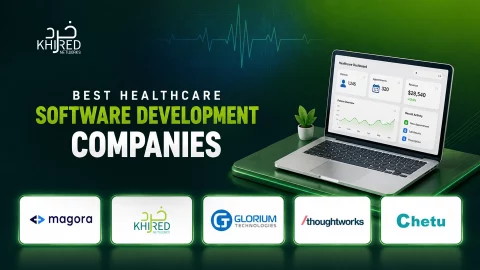
This guide lists 12 proven healthcare software development companies trusted by NHS organisations and healthtech innovators in 2026.
Choosing the Right Agency: Quick Checklist
Given here is a checklist for choosing the right custom healthcare software development company:
Do they have NHS project experience?
NHS procurement, security, and approval processes are unique. A partner with previous NHS delivery understands the ecosystem’s specific demands — from procurement frameworks to clinical governance.
Do they understand DCB0129 clinical safety?
This standard is mandatory for any software deployed in NHS settings. A partner who cannot produce a Clinical Safety Case cannot legally or safely deploy. Ask for examples of past safety cases they have authored.
Can they handle HL7/FHIR interoperability?
Healthcare software that cannot share data creates silos, not solutions. FHIR capability is essential for integrating with NHS systems, from GP records to hospital EMRs.
Do they offer post-deployment support?
Clinical systems require ongoing maintenance, safety updates, and regulatory compliance monitoring. Delivery is not the finish line. Ensure your partner provides a clear support and maintenance model.
Have they delivered live clinical systems?
Referenceable deployments in real clinical environments, not just demos or pilots, prove a partner can handle production pressure, clinical workflows, and real patient data.
Red flags to avoid:
- Cannot name specific NHS Trusts or clinical deployments
- Unfamiliar with DCB0129 or DTAC
- Suggests “we will figure out compliance later.”
- No post-launch support model
- Only shows portfolios of non-healthcare work
Verdict: If a partner cannot answer “yes” to all five questions, keep searching. Healthcare software is not ordinary software. The wrong choice puts patients at risk and projects at failure.
Important Point: Over 60% of healthcare IT projects face delays due to compliance gaps.
Choosing a Healthcare Software Development Partner: Overview
| Requirement | Why It Matters |
| Clinical safety case (DCB0129) | Mandatory for software deployed in NHS settings. Proves patient safety has been designed in. |
| DTAC compliance | Digital Technology Assessment Criteria, NHS England’s baseline for clinical safety, data protection, usability, and interoperability. |
| MHRA medical device classification | Your app may be a medical device. The right partner knows when and how to pursue clearance. |
| NHS interoperability (HL7/FHIR) | Software that cannot share data with NHS systems creates silos, not solutions. |
| NHS App Library listing | The kitemark for patient-facing tools. Requires clinical safety, data security, and usability standards. |
| GDPR/UK data protection | Healthcare data is special category. Breaches carry fines up to £17.5 million or 4% of global turnover. |
Best Custom Healthcare Software Development Companies in the UK
Here are 12 best healthcare software development companies in the UK serving the industry:
1. GloriumTechnologies
Headquarters: USA / Poland / Cyprus
Serves: UK & global
Glorium Technologies is a full-service healthcare software development partner with over 15 years of experience and 100+ satisfied clients. The company holds ISO 13485 certification for medical device quality management, ISO 27001 for information security, and ISO 9001 for quality management. They are also a Microsoft Silver Partner and AWS Select Tier Partner.
Their technical expertise spans .NET, React.js, Angular, Node.js, WebRTC, SMART on FHIR, HIPAA standards, ML, and AR/VR, with specific experience building EMR system platforms.
Multiple client reviews confirm delivery of complex, compliance-sensitive healthcare systems with AI integrations. The company has been recognised in the IAOP Global Outsourcing 100 ranking for three consecutive years (2023-2025) and in the Inc. 5000 for four years.
Specialist in: HIPAA/GDPR-compliant clinical platforms, medical device software, AI-powered healthcare automation, and EHR/EMR platforms.
Why they stand out: Three ISO certifications including medical device-specific ISO 13485; 80+ industry awards; strict HIPAA and GDPR adherence; and proven delivery of SMART on FHIR implementations.
Best for: Healthcare technology companies and healthtech startups seeking a full-service partner for compliance-sensitive platforms.
2. Kainos
Headquarters: Belfast & London, UK
Kainos has solidified its position as a trusted NHS partner, recently securing a place on the Crown Commercial Service’s Digital Capability for Health 2 (DCfH2) Framework. This framework, announced in January 2025, enables NHS Trusts, hospitals, Clinical Commissioning Groups, and other healthcare institutions to access Kainos for digital transformation services.
With over a decade of healthcare experience, Kainos has collaborated with more than 100 organisations; including NHS England, the Department of Health and Social Care, NHS Wales, NHS Trusts, and the wider healthcare and life sciences ecosystem. Their healthcare portfolio includes delivering population-scale services such as the NHS Apps in England and Wales and a Strategic Digital Partnership with Our Future Health.
Specialist in: Large-scale NHS digital transformation, population-health platforms, and DevOps for healthcare.
Why they stand out: Pre-approved on major UK government frameworks including DCfH2; proven track record at population scale; deep public sector procurement understanding.
Best for: NHS Trusts and public health bodies needing enterprise-scale digital transformation.
3. TPP
Headquarters: Leeds, UK
The Leeds-based health tech company provides an integrated electronic health record and communication platform connecting primary care, secondary care, mental health, community services, and social care across the UK.
Specialist in: Integrated EHR ecosystems, primary and secondary care connectivity, population health management.
Why they stand out: Deep integration across care settings; long-standing NHS partnerships; proven at national scale.
Best for: NHS regions seeking unified health records across organisational boundaries.
4. Andersen
Headquarters: London, UK (global offices)
Andersen brings 19 years of experience to healthcare software development, supported by a 30-member medical advisory board that ensures clinical relevance. Their custom EHR and EMR Solutions adhere to HIPAA/GDPR and health interoperability standards, including HL7/FHIR, SNOMED, DICOM, ICD, LOINC, and RxNorm.
The company has delivered 10+ successful healthcare projects and ensures its custom medical software development is ONC-ATCB-tested and certified for meaningful use. Their healthcare services span TeleHealth development, patient information management systems, clinical decision-support solutions, and PACS/DICOM imaging tools.
Specialist in: Custom EHR, telehealth, clinical decision support, and hospital information systems.
Why they stand out: Medical advisory board ensures clinical accuracy; ONC-ATCB certification; comprehensive interoperability standards support.
Best for: Healthcare providers needing clinically validated EHR or telehealth platforms.
5. Thoughtworks
Headquarters: London, UK (global)
Thoughtworks was awarded a place on the Digital Capability for Health 2 (DCfH2) framework in January 2025, joining 22 suppliers approved to support the UK Government’s Public Health and Social Care programs. With over 10,000 employees across 48 offices in 19 countries, Thoughtworks brings global technology consulting expertise to NHS digital challenges.
Their DCfH2 services include DevOps for live service improvements, digital definition services (discovery and alpha phases), build and transition services (beta and live phases), end-to-end development, and data management services.
Specialist in: Data mesh architecture, AI-driven R&D tools, NHS framework delivery, and GDS/NHS service standards.
Why they stand out: Global technology consultancy with deep NHS framework access; 30 years of digital innovation expertise; GDS assessment success.
Best for: NHS bodies requiring data architecture modernisation or AI-powered research tools.
6. Khired Networks
Headquarters: Pakistan (serving UK, Ireland, Europe, US)
Khired Networks is a specialised healthcare software development company focused on medical imaging systems and data-intensive clinical platforms. Unlike generalist vendors, the company brings deep expertise in handling complex imaging workflows, large-scale data management, and secure clinical environments.
The company has delivered a production-grade PACS (Picture Archiving and Communication System) for Mukhtar A. Sheikh Hospital, transforming radiology operations end-to-end.
Khired’s strength lies in building systems that work in real clinical settings, not just prototypes. Their solutions are designed for reliability, security, and scalability, ensuring healthcare providers can operate without workflow disruptions or data risks.
Specialist in: PACS and radiology systems, medical imaging workflows, healthcare data security, and custom clinical platforms
Why they stand out: Proven real-world PACS deployment with measurable clinical outcomes; deep expertise in imaging data systems; focus on performance, security, and usability in high-stakes environments
Best for: Healthcare providers and organisations building or upgrading radiology, imaging, or data-heavy clinical systems where reliability and performance are critical.
7. Softwire
Headquarters: London, UK
Softwire brings over 25 years of technology transformation experience in the UK public sector, healthcare, and other highly regulated industries. The company has delivered solutions for the UK government, NHS, MHCLG, Ministry of Justice, UK Export Finance, and the Department for International.
They consistently pass Government Digital Service (GDS) assessments and provide a comprehensive service combining digital and data engineering, product design, and GenAI. Their work in ophthalmology data platforms demonstrates specific clinical domain expertise.
Specialist in: NHS trust partnerships, ophthalmology data platforms, public-sector health systems, and GDS-compliant services.
Why they stand out: 25+ years regulated industry experience; consistent GDS assessment success; public sector transformation track record.
Best for: NHS Trusts requiring GDS-compliant service delivery or ophthalmic data platforms.
8. Magora
Headquarters: London, UK
Magora specialises in healthcare software for startups, with specific experience in MVP-stage health applications, pharma software, and patient engagement tools.
Specialist in: MVP-stage health apps, pharma software, patient engagement tools, and healthcare startup acceleration.
Why they stand out: Lean startup focus; rapid MVP delivery; experience bringing healthtech ideas to market.
Best for: Healthtech startups needing to validate concepts before full-scale investment.
9. Vention
Headquarters: London, UK (global offices)
Vention has specific expertise in blockchain-based health data exchange and remote patient monitoring. Their blockchain for healthcare solutions include health record management with immutable storage, audit trails, secure patient IDs, and consent tracking.
The company’s capabilities extend to supply chain traceability for pharmaceuticals, smart contract-based claim processing, blockchain-secured IoT for remote care, and compliance automation tools for HIPAA/GDPR. Vention builds decentralised solutions where all participants are equals in the network — no single party controls the records.
Specialist in: Health tech product scaling, remote patient monitoring, blockchain-based health data exchange, and IoT integration.
Why they stand out: Deep blockchain healthcare expertise; IoT and remote care focus; interoperability as core design principle.
Best for: Healthtech scale-ups needing secure data exchange or remote monitoring capabilities.
10. Chetu UK
Headquarters: London, UK (global offices)
Chetu specialises in HL7/FHIR interoperability, legacy EHR migration, and medical billing system integration. Their team has experience with Epic EHR implementations, including EpicCare, MyChart, pharmacy systems, and PACS/DICOM integrations.
Chetu’s interoperability solutions cover HL7 standards including ADT, ORM, ORU, CCD, CCDA, and FHIR for clinical and administrative data exchange. They interface Epic EHR systems with Health Information Exchanges (HIE), HIS data integration, and Practice Management Systems (PMS). Their compliance credentials include HIPAA, HITECH’s Meaningful Use, ICD-10, and HL7 International standards.
Specialist in: HL7/FHIR interoperability, legacy EHR migration, Epic integration, medical billing systems, and compliance certification.
Why they stand out: Epic implementation expertise; comprehensive interoperability standards; meaningful use certification.
Best for: Healthcare providers needing EHR migration or Epic integration services.
11. .NETinfluential
Headquarters: London, UK
.NETinfluential specialises in Microsoft stack healthcare solutions, with expertise in building secure, scalable applications for clinical and administrative workflows.
Specialist in: .NET healthcare applications, clinical workflow automation, and Microsoft cloud healthcare solutions.
Why they stand out: Deep Microsoft technology expertise; focus on clinical administrative efficiency; secure by design.
Best for: Healthcare organisations standardised on Microsoft technology stack.
12. 6B Digital
Headquarters: London, UK
6B Digital partners with NHS organisations, healthtech innovators, and private healthcare providers to design, develop, and deliver bespoke digital solutions tailored to modern healthcare needs. Their portfolio includes patient engagement platforms, clinical decision tools, and back-end systems; all built to be secure, standards-compliant, and focused on driving better outcomes.
Specialist in: Patient engagement platforms, clinical decision tools, back-end healthcare systems, and long-term digital transformation.
Why they stand out: Direct NHS partnerships; focus on clinical outcomes; end-to-end transformation capability.
Best for: NHS organisations and healthtech providers needing bespoke clinical or patient-facing systems.
Comparison Table: UK Healthcare Software Development Companies 2026
| Company | UK Presence | Key Healthcare Specialism | Compliance Credentials | Best For |
| Glorium Technologies | Serves UK | Clinical platforms, AI automation | ISO 13485, 27001, 9001; HIPAA/GDPR | Healthtech startups |
| Kainos | Belfast, London | NHS population-scale transformation | DCfH2 framework supplier | NHS Trusts |
| TPP | Leeds | Integrated EHR ecosystems | NHS primary care systems | Care setting integration |
| Andersen | London | EHR, telehealth, CDS | ONC-ATCB; HL7/FHIR | Clinical platforms |
| Thoughtworks | London | Data mesh, AI research tools | DCfH2 framework supplier | NHS data modernisation |
| Khired Networks | Global (serves UK) | PACS medical imaging | Healthcare data security | Radiology/imaging |
| Softwire | London | Ophthalmology, GDS services | Government Digital Service | NHS Trusts |
| Magora | London | MVP health apps, pharma | Lean validation | Healthtech startups |
| Vention | London | Blockchain health data, RPM | HIPAA/GDPR | Healthtech scale-ups |
| Chetu UK | London | HL7/FHIR, Epic integration, EHR migration | HIPAA, Meaningful Use, HL7 | Epic/EHR migration |
| .NETinfluential | London | .NET clinical systems | Microsoft cloud security | .NET healthcare |
| 6B Digital | London | Patient engagement, clinical tools | NHS standards compliance | Bespoke clinical systems |
Common Mistakes When Choosing a Healthcare Software Company
Listed here are some of the common mistakes that clients make while choosing a healthcare software company:
- Choosing general developers without healthcare expertise
General software developers can build functional applications. But they do not understand clinical workflows, NHS data standards, or the difference between a patient record and a user profile. Healthcare software built by generalists almost always fails compliance audits and frustrates clinical users. Domain expertise is non-negotiable.
- Ignoring clinical safety requirements until the end
Too many projects treat DCB0129 and clinical safety cases as an afterthought, something to “sort out” before deployment. This is a catastrophic error. Clinical safety must be designed in from day one, not bolted on at the end. Retrospective safety cases are expensive, time-consuming, and often impossible.
- Underestimating NHS integration complexity
Connecting to NHS systems is not a simple API call. It requires HL7/FHIR expertise, understanding of the NHS interoperability playbook, and often months of testing in NHS digital sandboxes. Partners who say “integration is easy” have never done it.
- Focusing only on cost instead of compliance
The lowest bidder is almost never the right choice for healthcare software. Cutting corners on clinical safety, data protection, or interoperability creates liabilities that far exceed any upfront savings. A cheap build that cannot pass DTAC or connect to NHS systems is worthless and expensive to replace.
- No plan for post-launch clinical safety maintenance
Software does not stay safe on its own. Clinical safety cases must be maintained as features change, integrations evolve, and new risks emerge. Partners without a clear post-deployment safety maintenance plan leave you exposed to regulatory action and patient harm. Always ask: “Who updates the safety case when we add a feature in year two?”
Conclusion
Choosing the right healthcare software development company in the UK is the most important decision in your digital health journey. Whether you need an EMR system, a patient engagement platform, or a clinical decision support tool, the partners profiled above have the NHS expertise, compliance credentials, and technical capability to deliver.
Planning a healthcare software project?
Avoid costly compliance mistakes and delays.
Khired Networks helps healthcare providers build secure, NHS-ready systems; from imaging platforms to full clinical applications.
Book a free consultation and validate your approach before you build.
Frequently Asked Questions
How much does healthcare software development cost in the UK?
Costs vary significantly based on complexity, compliance requirements, and scale. A basic patient portal may start at £50,000-£100,000. An integrated EHR or clinical decision support system typically ranges from £150,000 to £500,000+. Enterprise-scale platforms for NHS Trusts often exceed £1 million. Request custom quotes based on your specific requirements.
What is DTAC compliance?
DTAC (Digital Technology Assessment Criteria) is NHS England’s framework for assuring digital health technologies. It covers clinical safety, data protection, technical security, usability, and accessibility. Software deployed in NHS settings must meet DTAC standards.
Is my healthcare app a medical device under MHRA?
Possibly. If your app is intended for diagnosis, prevention, monitoring, prediction, prognosis, treatment, or alleviation of disease and its primary action is not pharmacological, immunological, or metabolic, it is likely a medical device. The UK MHRA provides a classification tool. Work with legal experts early.
How long does healthcare software development take?
A basic MVP can take 4-6 months, including discovery, design, development, and initial compliance documentation. Full-featured clinical platforms requiring DTAC/DCB0129 typically take 9-18 months. Enterprise NHS-scale projects may take 2-3 years including procurement and integration.
How do I integrate with NHS systems?
Integration typically requires HL7/FHIR standards, NHS Digital’s API platform, and compliance with the NHS England interoperability playbook. Most organisations partner with specialist developers (like those profiled above) with NHS integration experience rather than building from scratch.
What is DCB0129?
DCB0129 is the NHS clinical safety standard for health IT software. It requires manufacturers to produce a Clinical Safety Case demonstrating that potential hazards have been identified, risks mitigated, and safety maintained throughout the software lifecycle. It is mandatory for all software deployed in NHS settings that could impact patient safety.
How do I get NHS App Library listing?
NHS App Library listing requires passing clinical safety (DCB0129), data security (Data Security and Protection Toolkit), and usability assessments. The process typically takes 6-12 months from application to approval. Most successful applicants work with NHS-assigned clinical safety officers throughout development.


0 Comments