
SUMMARY
- Gartner projects over 40% of agentic AI projects will be cancelled by 2027 due to costs, unclear value, or inadequate risk controls. The lifecycle discipline described here separates survivors from failures
- 79% of enterprises say they have adopted AI agents, but only 11% run them in production. A 68-percentage-point gap that is a lifecycle problem, not a technology problem
- Most agentic AI projects fail at the point where teams try to move from a successful proof of concept into production. Gaps in architecture, testing, observability, and governance show up all at once
- AI-co-authored pull requests across 470 open-source GitHub projects produced 10.83 issues per PR compared with 6.45 for human-only PRs. Agentic systems that act without rigorous evaluation produce more defects
- A Fortune 500 enterprise using agentic AI reduced reporting time from 15 days to 35 minutes while dropping cost per report from $2,200 to $9. Results like these come from well-governed production deployments
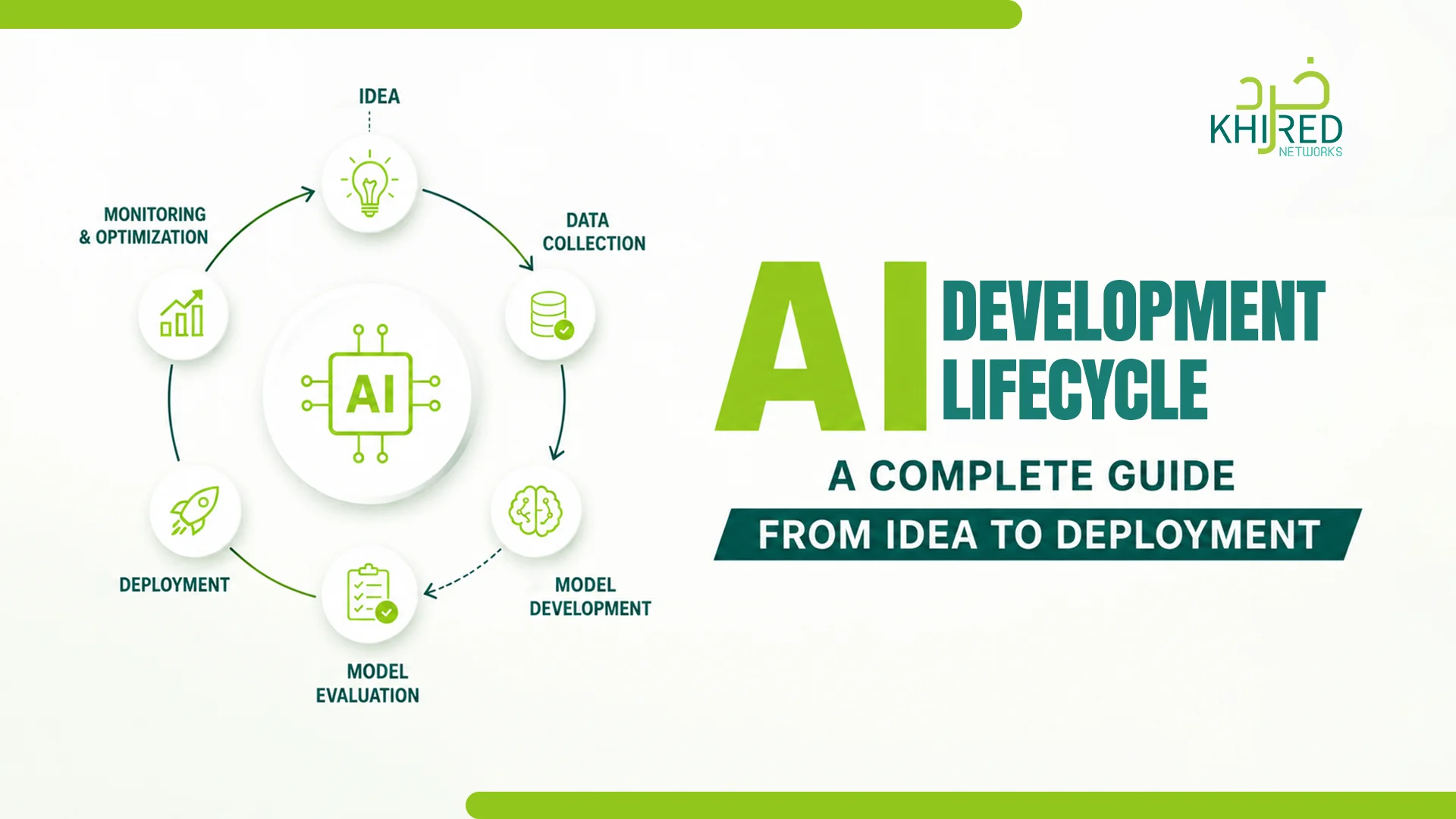
- The agentic AI development lifecycle is not a waterfall. It is a continuous loop where governance, evaluation, and discovery are ongoing functions, not one-time phases
Building an AI agent that works in a demo is straightforward. Within a week, most development teams can have something that impresses in a controlled environment: it retrieves the right documents, calls the right API, and produces the expected output. That prototype gets shown to leadership, budget gets approved, and a production deployment is planned.
Then things get hard.
Most agentic AI projects do not fail in early prototyping. They fail at the point where teams try to move from a successful proof of concept into production. At that point, gaps in architecture, testing, observability, and governance show up all at once.
The gaps are predictable. The fix is also predictable: a structured AI development lifecycle designed specifically for agentic systems.
Gartner expects over 40% of agentic AI projects to be cancelled by 2027. The projects that survive will not be the ones with the most sophisticated models or the largest AI budgets. They will be the ones built according to a disciplined development process that accounts for what makes agentic systems fundamentally different from the software that came before them.
This guide walks through that process, stage by stage, with the specific decisions, tools, and failure modes you need to understand at each step.
What Makes the Agentic AI Lifecycle Different
Before discussing the stages, it is worth being precise about what makes an agentic AI development lifecycle different from either traditional software development or standard ML model development.
|
Aspect |
Traditional Software |
Standard ML Model |
Agentic AI System |
|
Behaviour |
Deterministic — same input, same output |
Probabilistic output |
Non-deterministic at planning level — same goal, different action sequences |
|
Failure mode |
Wrong output from wrong code |
Wrong prediction |
Cascading actions across multiple systems |
|
Testing |
Code coverage, unit tests |
Model accuracy, validation sets |
Behavioural evaluation, adversarial testing, distribution testing |
|
Human role |
Uses the system |
Reviews predictions |
Oversees autonomous actions |
|
Success metric |
Uptime, feature completeness |
Accuracy, F1 score |
Task completion rate, escalation rate |
Agentic systems are different in three ways that change every stage of development:
Autonomy: Agents pursue goals across multiple steps without a human directing each one. The developer sets the intent. The agent handles the execution: planning, taking multi-step actions, using tools, calling APIs, and completing workflows without waiting to be told what to do next. This means errors compound across steps rather than being isolated to a single function call.
Non-determinism at scale: Agent behaviour is not just probabilistic at the output level. It is non-deterministic at the planning level. The same goal, given to the same agent twice, may result in different action sequences. Testing cannot enumerate all possible paths. Evaluation must cover behaviour distributions.
Real-world consequences: Agents do not just generate text. They send emails, update records, trigger payments, modify databases, and interact with external systems. A bug in a traditional application produces wrong output. A bug in an agent can take unrecoverable actions across multiple systems before anyone notices.
The agentic AI lifecycle adds phases and practices focused on autonomy boundaries, behavioural testing, ongoing discovery of new agents, and governance that covers every action an agent takes, not just its model output.
The 8-Stage Agentic AI Development Lifecycle
The agentic AI development lifecycle is a structured, end-to-end framework that guides you from identifying the right use case to deploying and governing autonomous agents in production. Each stage builds on the previous one, ensuring that autonomy, safety, and reliability are designed in from the start, not bolted on at the end.
Stage 1: Use-Case Discovery & Feasibility
What it is: The first stage is not about technology. It is about identifying the right problem.
Most agentic AI projects fail because they chose the wrong use case. A task too ambiguous for an agent to execute reliably, a workflow without measurable output, or a process where the cost of agent errors exceeds the cost of the manual process it was meant to replace.
What to do at this stage:
Start with the workflow, not the capability. Map every step the human currently takes, every system they touch, every decision point they navigate, and every exception they handle. An agent can replace the steps. It cannot replace the judgment embedded in how those steps were designed.
Evaluate the use case against four criteria:
|
Criteria |
Questions to Ask |
|
Frequency |
How often does this workflow run? Daily tasks generate faster ROI than monthly ones |
|
Structure |
How well-defined are inputs, steps, and acceptable outputs? Agents perform best on structured tasks |
|
Measurability |
Can you measure whether the agent completed the task correctly? If you cannot define “done,” you cannot evaluate quality |
|
Consequence of failure |
What happens when the agent makes an error? Low-consequence failures are recoverable; high-consequence failures require more testing overhead |
Output: A written use-case specification covering task definition, success metrics, data requirements, integration points, failure consequences, and a build/no-build recommendation.
Stage 2: Agent Architecture Design
What it is: Before any code is written, the agent’s architecture (its decision logic, tool set, memory model, orchestration pattern, and integration points) must be designed explicitly. This is the most consequential stage.
Core architectural decisions:
|
Decision Area |
Options |
|
Single vs Multi-Agent |
Single agents are simpler to build and debug. Multi-agent systems handle parallel workstreams but introduce coordination overhead |
|
Orchestration Pattern |
ReAct (Reason + Act), alternates reasoning and action; Plan-and-execute, produces full plan before acting; multi-agent supervisor, delegates to specialised agents |
|
Tool Design |
Scope tools precisely. An agent that can read a database record is safer than one that can update any field |
|
Memory Architecture |
In-context (session history), External (cross-session state), Episodic (logs of past actions for improvement) |
|
LLM Selection |
Frontier models for reasoning-heavy tasks; smaller, faster models for high-volume structured tasks |
Output: An architecture document covering orchestration pattern, tool specifications, memory design, LLM selection rationale, autonomy boundaries, and integration map.
Stage 3: Data Pipeline & Knowledge Foundation
What it is: Agents that act on outdated, incomplete, or incorrect data produce outdated, incomplete, or incorrect actions. This stage ensures the knowledge foundation is accurate, current, and structured for retrieval.
What this stage covers:
|
Component |
Description |
|
Document ingestion |
Every data source must be ingested, preprocessed, and indexed with appropriate chunking strategy, metadata tagging, and deduplication |
|
Vector indexing |
Embedding model selection, vector database configuration, and retrieval accuracy testing. The agent cannot compensate for a retrieval layer that surfaces wrong information |
|
Data quality validation |
Audit data sources for completeness, consistency, and accuracy before any agent uses them |
|
Continuous ingestion |
Production agents need knowledge bases that stay current through scheduled updates or event-triggered re-indexing |
Stage 4: Core Agent Build & Tool Integration
What it is: With architecture designed and data foundation built, this stage constructs the actual agent, orchestration logic, tool implementations, prompt engineering, and integration layer.
Build sequence:
- Build tools first: Each API call, database query, or external action should be tested independently before the agent can invoke it
- Implement orchestration layer: Configure the chosen framework (LangGraph, CrewAI, AutoGen) around the architecture design
- Engineer prompts deliberately: System prompts are precision engineering, not copywriting. Every constraint matters
- Build memory management: Session state, cross-session retrieval, and episodic logging implemented after core logic is stable
Stage 5: Behavioural Testing & Evaluation
What it is: This is where most production failures originate. Testing an agentic system is fundamentally different from testing conventional software because behaviour cannot be fully enumerated in advance.
What agentic evaluation covers:
|
Test Type |
Description |
|
Task completion testing |
Measure completion rate, output quality, and path taken on representative tasks |
|
Adversarial and edge-case testing |
Test unexpected inputs, ambiguous instructions, missing data, tool failures |
|
Prompt injection and safety testing |
Test whether malicious inputs can override instructions or access prohibited data |
|
Regression testing |
Run full evaluation suite after every change to system prompt, tools, or model |
|
Groundedness evaluation |
Ensure outputs are traceable to retrieved sources, not hallucinated |
Stage 6: Human-in-the-Loop Design & Safety Controls
What it is: Every production agent needs explicit human oversight mechanisms, not as a temporary limitation, but as a permanent architectural feature for high-consequence actions.
Human-in-the-loop design principles:
|
Action Type |
Consequence Level |
Control |
|
Read-only, reversible |
Low |
Agent acts autonomously |
|
Creates records, sends internal messages |
Medium |
Agent acts with logging and optional human review |
|
Sends external communications, processes payments, modifies critical data |
High |
Human approval required before action |
Implementation requirements:
- Approval workflows: Fast, context-rich notifications via Slack, email, or dedicated interface
- Kill switches: A mechanism to pause or stop execution at agent, session, and system levels
- Escalation paths: Define conditions for human escalation: confidence thresholds, repeated errors, unexpected inputs
Stage 7: Production Deployment & Observability
What it is: Deployment is the beginning of an ongoing operational responsibility, not a one-time event.
Deployment requirements:
|
Component |
Requirement |
|
Containerised serving |
Docker containers orchestrated by Kubernetes for reproducible deployments and scaling |
|
Observability |
Every agent action, decision, tool call, and output must be logged and traceable from day one |
|
Staged rollout |
Release to small traffic percentage first, monitor for unexpected failures, expand gradually |
|
Rollback capability |
Tested ability to revert to previous agent version within minutes |
Key metrics to observe:
- Latency per agent step and per full task
- Tool call success and error rates
- Task completion rates
- Token consumption per session (cost monitoring)
- Human escalation rates
- User feedback signals
Stage 8: Continuous Improvement & Governance
What it is: An agent deployed to production is the beginning of a continuous improvement cycle and a governance responsibility that does not end.
Continuous improvement mechanisms:
|
Mechanism |
Description |
|
Performance monitoring |
Monitor task completion rates, output quality, and user feedback continuously |
|
Drift detection |
Set threshold alerts that trigger investigation before users notice degradation |
|
Knowledge base maintenance |
Establish owner, review cadence, and automated monitoring for outdated documents |
|
Model updates |
Run full evaluation suite against any new model before updating production |
|
Governance registry |
Track which agents are deployed, their authorised actions, owners, and oversight controls |
Common Failure Patterns at Each Stage
|
Stage |
Common Failure |
Fix |
|
1 |
Wrong use case, too ambiguous or high consequence |
Rigorous feasibility criteria before architecture design |
|
2 |
Over-scoped tools, agent has broader access than needed |
Minimal tool scope as reliability requirement |
|
3 |
Data quality ignored, assuming data is clean |
Explicit data remediation before development |
|
4 |
Ambiguous system prompts, no constraints on what not to do |
Test every constraint explicitly |
|
5 |
Evaluation with synthetic data, missing real-world noise |
Test on real user inputs with edge cases |
|
6 |
Kill switch as afterthought, no tested stop mechanism |
Build and test kill switch before deployment |
|
7 |
Deploying without observability, no debugging information |
Logging and monitoring active from day one |
|
8 |
No governance owner, no one accountable for performance |
Assign specific owner before deployment |
Agentic AI Lifecycle vs Traditional SDLC
|
Dimension |
Traditional SDLC |
Agentic AI Development Lifecycle |
|
Behaviour |
Deterministic — same input, same output |
Non-deterministic — same goal, different action sequences |
|
Failure mode |
Wrong output from wrong code |
Cascading actions across multiple systems |
|
Testing approach |
Code coverage, unit tests, integration tests |
Behavioural evaluation, adversarial testing, distribution testing |
|
Requirements |
Feature specifications |
Outcome definitions and autonomy boundaries |
|
Deployment |
Ship and maintain |
Ship, observe, evaluate, and continuously improve |
|
Governance |
Access controls and audit logs |
Agent registry, action authorisation, kill switches |
|
Human role |
Uses the system |
Oversees the system’s autonomous actions |
|
Iteration driver |
Bug reports and feature requests |
Evaluation metrics, drift detection, new use-case discovery |
|
Success metric |
Uptime and feature completeness |
Task completion rate, output quality, escalation rate |
Tools and Frameworks for Each Stage
|
Stage |
Primary Tools |
|
1 — Use-Case Discovery |
Miro / FigJam (workflow mapping) · Internal stakeholder interviews · ROI calculators |
|
2 — Architecture Design |
LangGraph · CrewAI · AutoGen · Semantic Kernel · Architecture diagram tools |
|
3 — Data Pipeline |
LangChain document loaders · LlamaIndex · Pinecone · Weaviate · Qdrant · Apache Airflow |
|
4 — Core Agent Build |
LangChain · LangGraph · FastAPI · llama-cpp-python · OpenAI SDK · Anthropic SDK |
|
5 — Evaluation |
LangSmith · RAGAS · PromptFoo · Custom evaluation harnesses · Human eval panels |
|
6 — Human-in-the-Loop |
Slack Workflow Builder · Custom approval UIs · LangGraph interrupt nodes |
|
7 — Deployment & Observability |
Docker · Kubernetes · LangSmith · Prometheus · Grafana · AWS / Azure / GCP |
|
8 — Governance |
Internal agent registries · Arthur AI ADLC framework · DataRobot AI governance · Audit logging systems |
Conclusion
The agentic AI development lifecycle is not a new version of software development with AI components added. It is a fundamentally different engineering discipline, one where the system under development plans its own actions, uses real tools, and produces real-world consequences that cannot always be undone.
Gartner projects that over 40% of agentic AI projects will be cancelled by 2027 due to escalating costs, unclear business value, or inadequate risk controls. The projects that will not be cancelled are the ones that approach each stage with discipline: precise use-case selection, explicit architecture design, honest data quality assessment, rigorous behavioural evaluation, deliberate human oversight design, real observability from day one, and a named owner accountable for ongoing governance.
None of that is complicated. All of it requires doing the work that prototype culture consistently skips.
A Fortune 500 enterprise using agentic AI reduced reporting time from 15 days to 35 minutes while dropping cost per report from $2,200 to $9. Results like that do not come from impressive demos. They come from agents built with the full lifecycle behind them.
Building production-grade AI agents for your business?
Khired Networks designs and deploys agentic AI systems that go all the way from use-case discovery to governed production — for startups and enterprises globally. Explore our AI agent development services or book a free discovery call.
Frequently Asked Questions
What is the agentic AI development lifecycle?
The agentic AI development lifecycle is a structured process for building, testing, deploying, and governing autonomous AI agent systems. Unlike traditional software development, it includes specific stages for autonomy boundary design, behavioural evaluation, human-in-the-loop controls, and ongoing governance.
How is agentic development different from regular software development?
Traditional software is deterministic. The same input always produces the same output. Agents are non-deterministic at the planning level. The same goal may result in different action sequences. Testing must cover behaviour distributions, failures can cascade across systems, and governance must cover ongoing agent actions.
Why do so many agentic AI projects fail before reaching production?
Most agentic AI projects fail at the point where teams try to move from a successful proof of concept into production. Common causes are wrong use case selection, over-scoped tool access, insufficient behavioural testing, no observability infrastructure, and no governance owner assigned.
How long does the agentic AI development lifecycle take?
A focused, single-workflow agent with well-defined scope and existing data infrastructure typically takes 8–14 weeks from use-case discovery to production deployment. Multi-agent systems with enterprise integrations take 16–24 weeks.
What is human-in-the-loop in agentic AI development?
Human-in-the-loop refers to explicit checkpoints where a human reviews and approves an agent’s planned action before execution. For high-consequence actions, sending external communications, processing payments, modifying critical records, HITL controls prevent unrecoverable autonomous actions.
How do you evaluate an AI agent’s performance?
Agent evaluation covers task completion rate, output quality against domain-specific criteria, edge-case and adversarial input handling, groundedness of retrieved-information outputs, tool call success rates, and regression testing after any component change.
What is the difference between an AI agent and a chatbot?
A chatbot responds to a single input and waits. An AI agent pursues a goal across multiple steps, using tools, calling APIs, and taking actions autonomously until the task is complete or it encounters a condition requiring human escalation.
How does the lifecycle differ for mobile AI applications?
The AI mobile app development lifecycle follows the same eight stages with additional constraints: smaller model sizes for on-device inference, battery and compute budget management, offline capability design, and graceful degradation when connectivity is limited.


0 Comments
Trackbacks/Pingbacks