
As a business owner or startup founder, relying on phone calls or manual bookings can limit your growth. Even with strong marketing, outdated systems slow everything down and hurt customer experience.
Now imagine your daily orders starting to grow. This sounds like success, but your systems may not handle the load. Requests are delayed. Customers feel ignored. Growth turns into stress.
This is where on-demand app development takes the stage. In a world where convenience defines customer expectations, this practice is reshaping industries, especially the fintech sector. The global on-demand services market is projected to be worth over $210 billion in 2025, showing massive growth and opportunity for businesses and entrepreneurs alike.
This surge highlights why on-demand app development isn’t just a trend but a strategic move for businesses that want to stay relevant and profitable. So, in this article, we walk you through the essential features, realistic costs, and the technology stack behind building successful on-demand apps.
On-Demand App Service: The Fundamentals
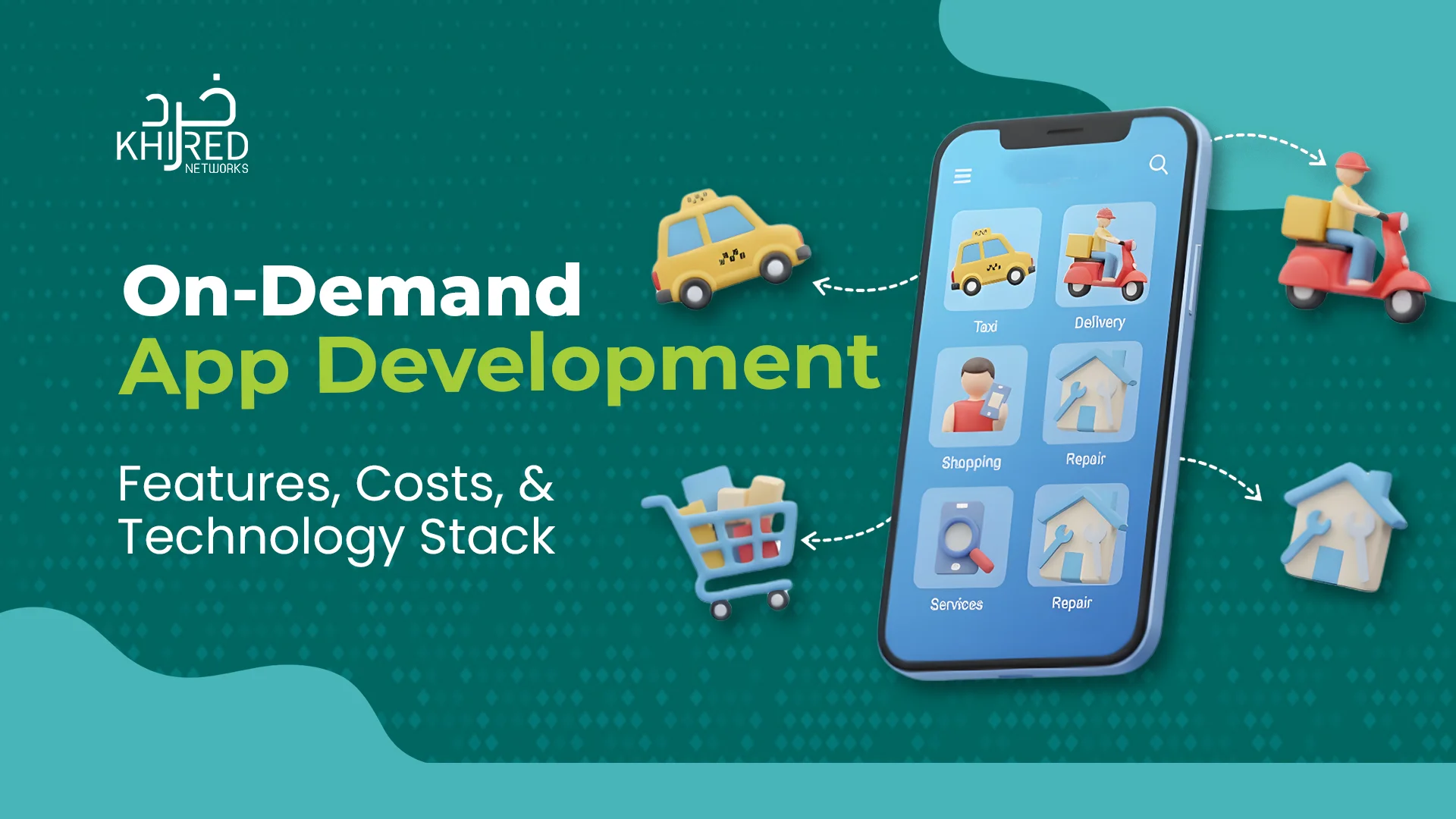
An on-demand app is an online platform (a mobile or a web application) that allows for instant connection of the users with services or products. With just a few clicks, you can then receive or request a service.
Whether it’s booking a ride, ordering food, scheduling home services, or accessing healthcare, on-demand apps bridge the gap between users and providers. These apps work in real time, offering simplicity, speed, and convenience.
Example
Popular examples of this app service model include:
- Uber for ride-hailing
- Doctor on Demand for telemedicine
- Glovo for food and goods delivery
Types of On-Demand Apps
On-demand apps are built to deliver services instantly or within a short time. However, these applications can be categorized into the following types:
B2C (Business-to-Consumer) On-Demand Apps focus on individual users and instant services. Speed, ease of use, and customer experience are key priorities. These include ride-hailing apps, food delivery platforms, grocery apps, home services, and healthcare booking apps.
B2B (Business-to-Business) On-Demand Apps serve companies rather than individuals. These apps emphasize reliability, scalability, integrations, and long-term efficiency to support business operations.
Examples include logistics platforms, equipment rental apps, staffing services, and SaaS-based service marketplaces.
Person-to-Person (P2P) On-Demand Apps connect individuals directly, allowing users to offer or request services or transactions without a traditional business acting as the provider.
Examples include ride-sharing apps, payments and transfers, home services, marketplaces, etc.
Key Features of On-Demand App Development
On-demand app development requires careful consideration of the features that will be included in the app. These are a mix of features for buyers (customers), service providers, and administrators.
Each group needs the right tools to ensure smooth service delivery, strong engagement, and reliable platform management. Below is a clear breakdown of these key features.
1. Features for the Customer App
- Registration & Profile Management: Customers must be able to sign up quickly and securely. This includes creating profiles where they can store preferences, manage details, and return for future orders with ease.
- Service Marketplace & Search: Users should see all available services or products in a simple marketplace layout. Smart searches and filters help them find exactly what they need without confusion.
- Booking and Ordering Functionality: Customers need a smooth booking process — whether it’s a service request or item purchase. This feature should be included to let users select options, date, and time with minimal steps.
- Order Tracking & Real-Time Status: After booking, customers should see real-time updates. Tracking where their delivery or service provider is what builds trust and reduces uncertainty.
- Payments & Wallet Options: Secure payment options such as cards, mobile wallets, and even cash are essential. Users should also be able to check order history, receipts, or wallets easily.
- Ratings, Reviews & Recommendations: Customers must be able to rate their experience and read others’ feedback. This improves trust and helps others choose services with confidence.
- Push Notifications & Alerts: Timely alerts keep customers informed about bookings, provider arrivals, discounts, or order changes.
2. Features for the Service Provider App
- Provider Profile & Status Control: Service providers should be able to manage their profiles and update availability on the app. Also, the app development should be done in a way that presents service details easily.
- Order Management & Real-Time Updates: Providers must receive job requests instantly and update statuses like “accepted,” “on the way,” or “completed,” ensuring clear communication.
- Earnings Dashboard & Reports: A clear earnings view helps providers monitor daily revenue, completed jobs, and performance trends over time.
- Geolocation & In-App Chat: Real-time tracking and direct messaging with customers help providers reach locations quickly and resolve queries fast.
- Ratings & Customer Feedback: Providers should see ratings and feedback, helping them maintain quality and improve services day by day.
3. Features for the Admin Panel
- Control Dashboard: Admins get a central dashboard to manage users, providers, and all services across the platform efficiently.
- Manual Order & Content Management: Admins can handle bookings, adjust content, manage listings, and update service categories.
- Reports, Analytics & User Insights: Detailed analytics help businesses track sales, behavior trends, and performance to make informed decisions.
- Payments, Fees & Subscription Tools: Admins manage financial flows, commissions, subscription models, and payout structures with control and clarity.
- Notification & Access Settings: Control over alerts, feature toggles, and access permissions ensures the platform runs securely and flexibly.
On-Demand App Development Cost
Estimating the cost of building an on-demand app can be confusing because it depends on many factors, such as:
- Features
- Platforms
- Design quality
- Location of developers
- Scalability requirements
Here’s a simple breakdown to help you understand what to expect.
|
App Type |
Features Included |
Estimated Cost Range |
|
Basic App (MVP) |
User registration, service browsing, basic payments, and simple order tracking. |
$25,000 – $120,000 |
|
Mid-Level App |
Real-time tracking, multiple payment methods, custom UI/UX, and stronger backend systems. |
$120,000 – $200,000 |
|
Advanced App |
Analytics, AI-based personalization, complex admin dashboards, and high-traffic support. |
$200,000 – $300,000+ |
Understanding the Technology Stack
A technology stack is the set of tools and technologies used to build your app. Choosing the right stack affects performance, scalability, cost, and how easily the app can be updated.
|
Technology Layer |
Purpose |
Common Tools & Technologies |
|
Frontend (User Interface) |
Handles everything users see and interact with inside the app |
React Native, Flutter, Angular |
|
Backend (Server & Logic) |
Manages requests, business logic, and communication between the app and the database |
Node.js, Django, Spring Boot |
|
Database Systems |
Stores user data, orders, transactions, and service records |
PostgreSQL, MySQL, MongoDB |
|
APIs & Third-Party Integrations |
Adds features like payments, maps, notifications, and messaging |
Stripe, PayPal, Google Maps, Firebase |
|
Cloud Hosting & Deployment |
Hosts the app, ensures scalability, and handles traffic spikes |
AWS, Google Cloud, Microsoft Azure |
Recommended Additions
The following are some extra recommendations that further strengthen the app and provide value to the users:
- Security & Authentication: Protects user data, payments, and login systems. Examples include: JWT, OAuth, Firebase Auth.
- Analytics & Monitoring: Tracks app performance, user behavior, and errors. Examples include Google Analytics, Firebase Analytics, and New Relic.
Summing Up
Whether you’re just starting or ready to scale, understanding the essentials — from costs to
tech choices — is key to launching a successful on-demand platform.
On-demand app development is a powerful vehicle for transforming ideas into profitable digital solutions. With the right features, realistic budgeting, and a well-chosen technology stack, businesses can build apps that delight users and stay ahead in competitive markets.
Frequently Asked Questions
What is on-demand app development?
On-demand app development refers to the process of creating mobile or web applications that connect users with services, products, or resources instantly or whenever they need them.
Which components are needed for on-demand app generation?
A successful on-demand platform requires three distinct but interconnected components:
- a Customer App
- a Service Provider App
- a powerful Admin Panel to manage the entire ecosystem
What are the 7 stages of app development?
The application development lifecycle includes seven key steps:
- Idea generation
- Planning
- UX/UI design
- Development (frontend, backend, and APIs)
- Testing
- Launch
- Post-launch maintenance


0 Comments