
Imagine launching a product with everyone excited and motivated to work on it. But then comes a roadblock – a confusion about what was actually agreed upon and how to proceed. The result? Deadlines slip, costs rocket, and relationships strain.
This is where the planning tools come into play. It is these tools that help make the tiring paperwork less overwhelming. The significance of these tools is evident from the fact that many projects fail not because of a lack of effort, but because expectations were never clearly defined and documented.
Did you know that the lack of clear goals is the most common factor for project failure, for nearly 37% of projects? (According to a survey by Content Snare)
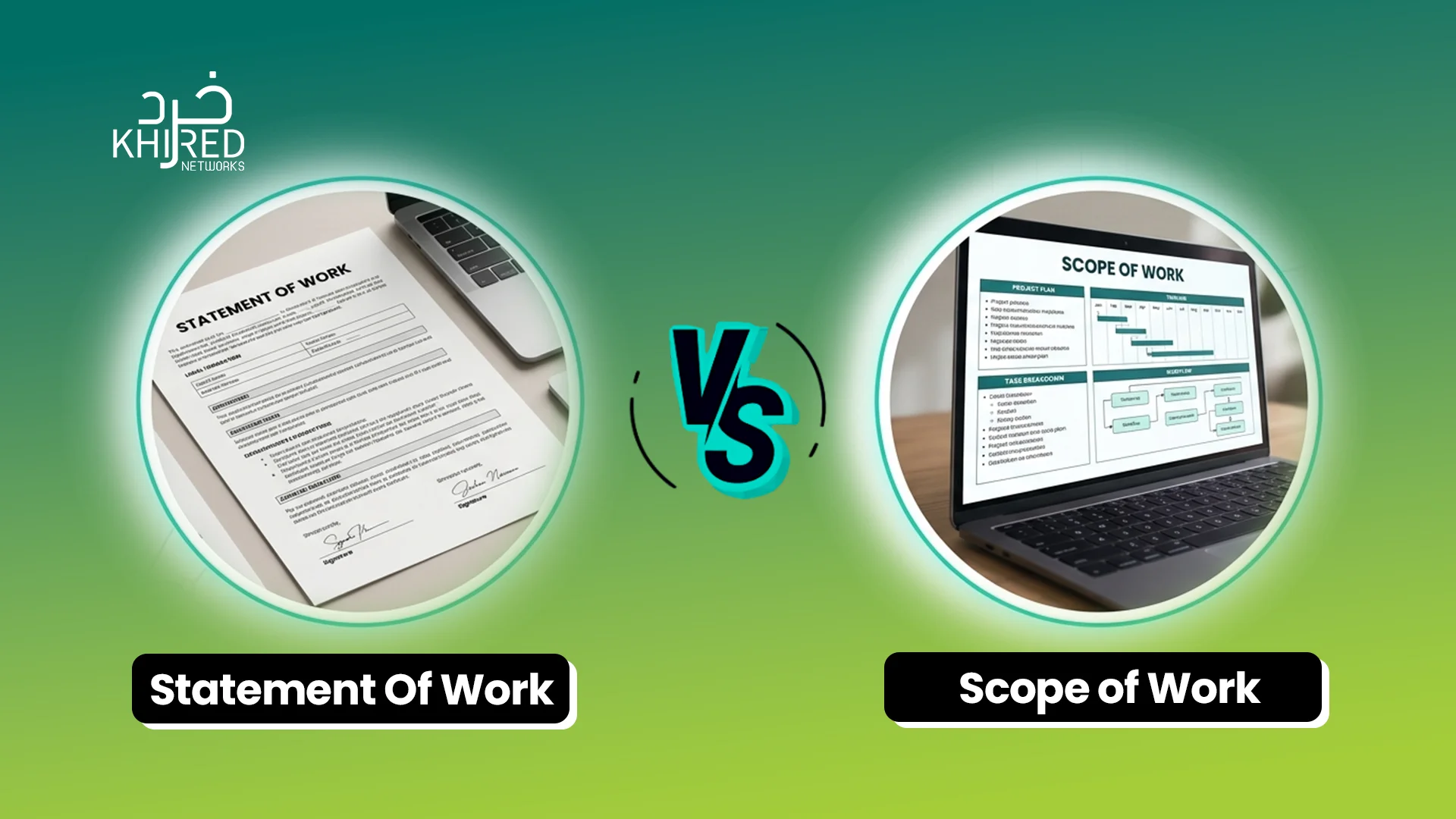
Two key documents help solve this problem: the Statement of Work and the Scope of Work. While they may sound similar, they serve different purposes in project management and business agreements. Many professionals confuse them, which often leads to delays, budget issues, or misunderstandings.
In this guide, we will simplify both concepts and help you confidently choose the right document for effective project management in app development.
What Is a Statement of Work (SOW)?
A Statement of Work is a formal, detailed document that defines the full scope of a project. It clearly outlines what work will be delivered, how it will be executed, when milestones will be completed, and how much the project will cost.
SOWs are commonly used in industries such as:
- IT
- Software development
- Construction
- Consulting
Having a properly drafted SOW helps align clients and service providers.
Why a Statement of Work Matters
A well-defined SOW acts as a single source of truth throughout the project and application development lifecycle. In real-world projects, unclear scope is one of the leading causes of delays, budget overruns, and disputes.
By documenting expectations upfront, a Statement of Work helps:
- Prevent scope creep and unexpected changes
- Set clear responsibilities for both parties
- Improve accountability and communication
- Reduce legal and financial risks
This clarity not only builds trust but also ensures smoother execution from start to finish.
Key Elements of a Statement of Work
A strong SOW goes beyond basic project details and provides structured, actionable information. Key components typically include:
- Project Scope: What is included (and excluded) in the project
- Deliverables: Specific outputs with measurable outcomes
- Timeline & Milestones: Key deadlines and phases
- Roles & Responsibilities: Who is responsible for what
- Pricing & Payment Terms: Cost structure, billing schedule, and conditions
- Acceptance Criteria: How deliverables will be reviewed and approved
- Change Management Process: How modifications will be handled
Including these elements ensures the document is not just descriptive, but operational.
Example of SOW
For example, if a company hires a web development agency, the SOW will outline the number of pages, design requirements, technology stack, deadlines, revision limits, and payment terms. It may also define performance expectations, such as page load speed or mobile responsiveness.
This level of detail ensures both parties are aligned before work begins, reducing misunderstandings and keeping the project on track.
Now that we understand the broader concept of a Statement of Work (SOW), it’s important to examine the Scope of Work and how it fits within project management as a service model.
What Is a Scope of Work?
A Scope of Work is a focused document that defines the exact tasks, deliverables, and boundaries of a project. It clearly answers one key question: what work will be done—and what will not be included.
Unlike a full SOW, it concentrates on project execution details rather than contracts, pricing, or legal terms.
Why Scope of Work Is Important
A well-defined Scope of Work is essential for keeping projects on track. In real-world scenarios, an unclear or incomplete scope is one of the main reasons projects go over budget or miss deadlines.
By setting clear boundaries, a Scope of Work helps:
- Prevent scope creep and unapproved additions
- Keep teams aligned on priorities and deliverables
- Improve project timelines and resource planning
- Reduce back-and-forth between clients and teams
According to the Project Management Institute, clearly defined project scope and documentation are critical factors in project success and stakeholder alignment. This clarity ensures that everyone involved understands exactly what is expected from the start.
Key Elements of a Scope of Work
An effective Scope of Work is clear, specific, and actionable. It typically includes:
- Tasks & Activities: Detailed breakdown of the work to be performed
- Deliverables: Measurable outputs expected at each stage
- Timeline & Milestones: Key deadlines and progress checkpoints
- Exclusions: What is not included to avoid confusion later
- Dependencies: Any requirements or inputs needed to proceed
Unlike a full SOW, this document focuses primarily on execution rather than financial or contractual terms.
Scope of Work Example
For example, in a logo design project, the Scope of Work might include two initial design concepts, up to three rounds of revisions, and final delivery in specific file formats. It may also mention what is not included, such as additional concepts or branding guidelines.
This level of detail keeps expectations clear, prevents extra requests without approval, and helps ensure smooth project delivery.
SOW vs Scope of Work: Components & Practical Differences
The following table offers a quick look at the practical differences between the two important types of documentation for software development and other projects.
|
Aspect |
Statement of Work (SOW) |
Scope of Work |
|
Key Components |
Scope, deliverables, timelines, pricing, roles, acceptance criteria, terms |
Tasks, deliverables, milestones, exclusions, dependencies |
|
Includes Pricing |
Yes, includes budget and payment terms |
No, typically excludes financial details |
|
Legal/Contractual Role |
Often part of a formal contract |
Usually, a supporting or internal document |
|
Flexibility |
More rigid due to the contractual nature |
More flexible and easier to adjust |
|
Risk Management |
Reduces legal, financial, and operational risks |
Prevents scope creep and miscommunication |
Statement of Work vs Scope of Work: Which One Do You Need?
After knowing the differences between the two, it’s time to decide which one you should use for your project.
When Should You Use SOW?
A Statement of Work is especially important for:
- Complex or long-term projects
- Projects involving multiple stakeholders
- Fixed-budget or fixed-scope engagements
- Outsourced or third-party services
Using an SOW in these scenarios improves transparency and helps avoid costly miscommunication.
When Should You Use a Scope of Work?
A Scope of Work is especially useful for:
- Creative and design projects
- Software development tasks or feature releases
- Freelance or short-term engagements
- Projects where clear boundaries are critical
Using a well-defined Scope of Work improves efficiency, reduces confusion, and ensures that the project stays focused from start to finish.
Common Mistakes to Avoid
Even small documentation errors can lead to project delays, confusion, or budget issues if not handled properly.
- Mixing Both Documents: Treating both documents as the same can lead to confusion and incomplete planning. Each serves a different purpose and should be used accordingly.
- Lack of Clarity: Vague descriptions of objectives and goals create misunderstandings between teams and clients. Clear, specific wording is, therefore, essential.
- Undefined Deliverables: Without clear deliverables and success criteria, it becomes difficult to track progress or approve work.
- Ignoring Scope Creep: Allowing extra tasks without approval of the managing personnel can disrupt timelines and increase MVP development costs and other expenses.
- No Approval Process: Skipping formal sign-offs can lead to confusion about what has been completed or accepted.
- Ignoring Updates: Failing to update documents as the project evolves can make them outdated and less useful.
Final Thoughts
The documents important in project management, Statement of Work and a Scope of Work, each carry its own significance. So, the choice between the two can be challenging, but it becomes easy once you understand their purpose.
One gives a complete project roadmap, while the other defines specific tasks. Both play an important role in successful project execution. Following industry’s best practices, using these documents correctly helps reduce risks and improve communication.
Frequently Asked Questions
What is the difference between ToR and SOW?
A Statement of Work (SOW) defines project deliverables, timelines, and responsibilities, while Terms of Reference (ToR) outline objectives, scope, and purpose of a project, often used in research or consulting projects.
What is the difference between the scope of work and the statement of work?
The scope of work defines tasks and deliverables, while the statement of work includes full project details such as timelines, costs, responsibilities, and legal agreements.
Can the scope of work be part of a statement of work?
Yes, in many projects, the scope of work is included within the statement of work to clearly define tasks while keeping the overall agreement structured.
When should you use both Statement of Work and Scope of Work?
Both documents should be used together in complex projects. The Scope of Work defines tasks and deliverables, while the Statement of Work formalizes the agreement with timelines, pricing, and responsibilities.


0 Comments