
Your startup’s first version can make or break the entire business.
Many startups fail not because their ‘product idea’ is bad, but because the first version of their product is incorrect. Founders invest heavily in developing and marketing a product they believe customers will love. But what if there is no interest and no market need for that product?
According to research by CB Insights, 43% of startups fail because there is no market need for their product. This suggests that early product validation is one of the most important steps in building a startup.
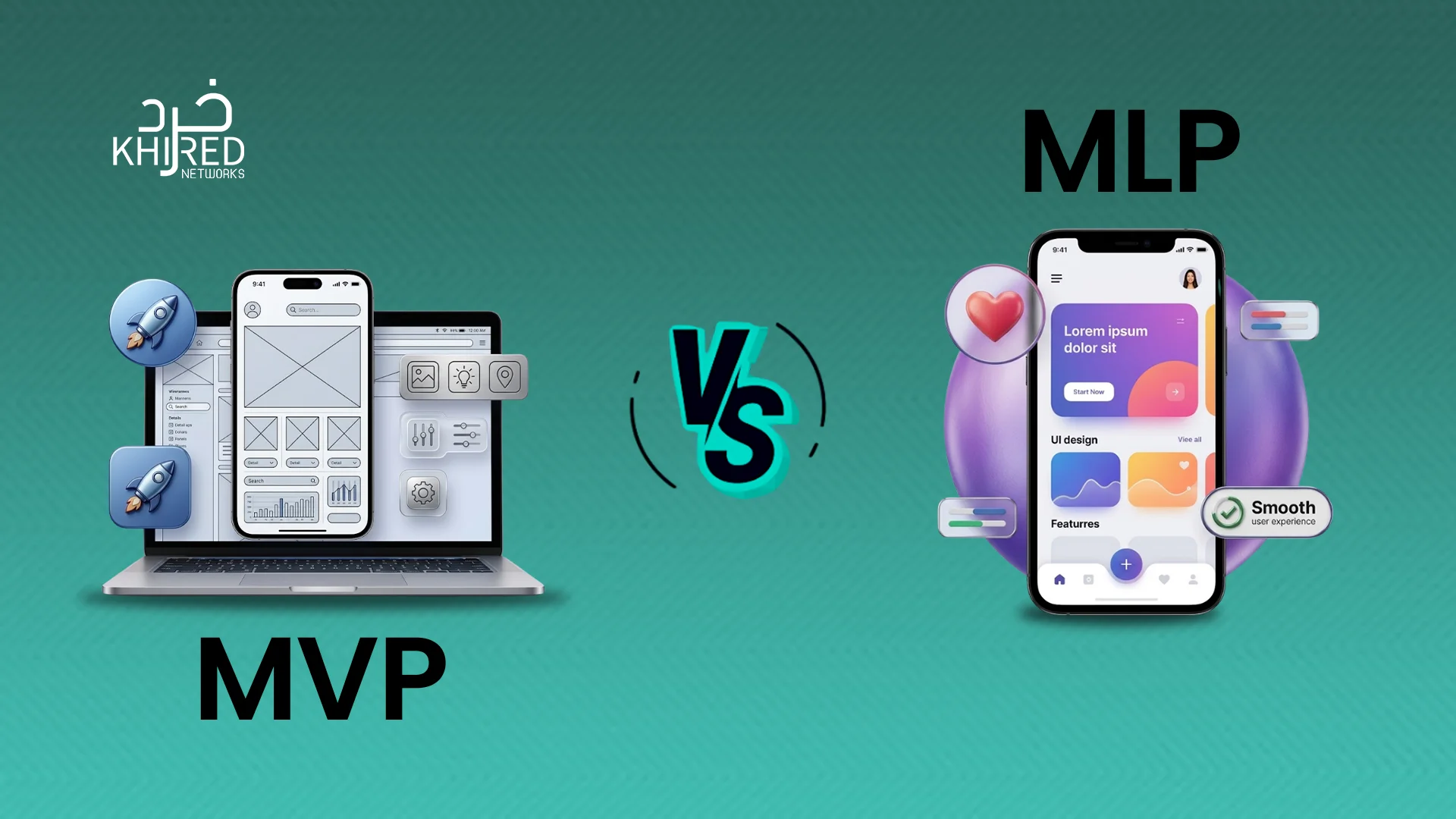
Then again, we have several “minimum” versions of the product. Product teams use frameworks like the Minimum Viable Product (MVP), the Minimum Marketable Product (MMP), and the Minimum Lovable Product (MLP).
But many founders still struggle to distinguish between them. In this guide, we will break down MVP vs MLP, explain when each approach works best, and help startups choose the right strategy.
Understanding the Idea Behind Early Product Versions
Before comparing the two concepts, it is important to understand why early product versions exist in the first place.
Startups rarely succeed by building a perfect product from day one. Instead, they release a smaller version, observe how users react, and then improve it over time.
Benefit:
This approach reduces risk. Instead of spending years developing a product that might fail, teams test their idea early and adjust based on real feedback.
In modern product development, especially in startup environments, early product releases are part of a learning process. They help teams understand user needs, discover problems, and refine their business model.
Two popular strategies for this early launch stage are the MVP and the MLP.
Now, let’s begin to address this question: Should you launch something simple and quick, or should you focus on creating something users instantly love?
What Is Minimum Viable Product (MVP)?
The first concept to understand is what a Minimum Viable Product is.
A Minimum Viable Product is the simplest version of a product that still solves a core problem for users. It contains only the essential features needed to test whether the idea works.
Goal of MVP: to learn, not perfection.
Instead of building a full product with many features, the team creates a small version and releases it to early users. These users provide feedback that helps the company decide what to build next.
In MVP in project management, this approach helps teams move faster and reduce development risk. Instead of guessing what users want, they rely on real data.
For example, many famous startups started with MVPs. Dropbox initially validated its idea with a simple demo video explaining the product before building the full platform.
This approach allows startups to test demand before investing heavily in development. Once the MVP is launched, teams can evaluate its performance and decide how the product should evolve.
Key Benefits of an MVP for Startups
Hiring an MVP development team works well for startups because it focuses on speed, learning, and validation.
1. Faster Product Launch
One of the biggest benefits of an MVP is speed. By focusing only on essential features, startups can launch their product much faster than traditional development methods.
This early launch allows teams to enter the market quickly and start collecting user feedback.
2. Lower Development Risk
Building a full product requires time and money. If the idea fails, the loss can be huge.
An MVP reduces this risk because the team invests less time and resources in the first version.
3. Real User Feedback
Instead of relying on assumptions, startups can learn directly from users.
Feedback from early adopters helps teams improve features, fix usability issues, and identify what customers actually want.
This learning cycle is one of the most important parts of MVP in product management.
What Is the Minimum Lovable Product (MLP)?
Now, let’s answer another important question: What is the minimum lovable product?
The MLP stands for Minimum Lovable Product.
Unlike an MVP, which primarily focuses on testing whether an idea works, a Minimum Lovable Product (MLP) focuses on creating a product that users genuinely enjoy using. While an MLP still includes a limited set of features, those features are carefully designed to deliver a positive and memorable user experience.
Idea behind MLP: The idea behind an MLP is relatively simple. A product should not only function properly—it should also make users feel good about using it. In other words, the goal is to create something that users appreciate, rather than something they merely tolerate.
This concept gained attention because many MVPs often felt unfinished or uninspired. Although they technically worked, they sometimes failed to generate excitement or build strong user engagement.
An MLP addresses this gap by prioritizing user experience, thoughtful design, and emotional connection from the very beginning. Instead of launching a basic product just to validate an idea, businesses aim to release something that users genuinely like and want to continue using.
MVP vs MLP: Key Differences
Before taking a deeper dive, let’s have a quick look at the key differences between the two models of “minimum” product development.
| Feature | Minimum Viable Product (MVP) | Minimum Lovable Product (MLP) |
| Main Goal | Test whether the product idea works in the market | Create a product that users enjoy and connect with |
| Focus | Core functionality and problem-solving | User experience and emotional connection |
| Product Features | Only essential features needed to validate the idea | Limited features, but polished and well-designed |
| Development Speed | Usually faster because fewer design details are included | Slightly slower because user experience is prioritized |
| User Reaction | Users may find it useful, but not exciting | Users are more likely to enjoy using it |
| Risk Level | Reduces risk by validating the idea early | Reduces risk by improving user satisfaction |
| Best For | Early startup validation and testing | Products where design and experience matter |
| Use in Product Strategy | Common in MVP in product management and startup experimentation | Often used after MVP to improve engagement |
MVP vs MLP: A Deeper Look
When discussing MLP vs MVP, the key difference lies in the purpose of each approach. Both strategies are used in the modern application development lifecycle, but they prioritize different aspects during the early stages of product launch.
Here, we discuss the major differences between the two in detail.
1. Focus on Function vs User Experience
One of the biggest differences between the minimum lovable product and MVP comparisons is the primary focus of development.
A Minimum Viable Product (MVP) focuses on validating a business idea as quickly as possible. The goal is to release a basic version of the product with just enough features to test whether the core concept solves a real user problem.
A Minimum Lovable Product (MLP), on the other hand, focuses on creating a product that users genuinely enjoy using. While it still includes a limited set of features, those features are designed with strong attention to usability, design, and overall user satisfaction.
2. Speed vs Product Delight
Another important difference between the MLP and MVP approaches is development speed.
MVP development prioritizes speed. Product teams launch quickly with minimal features in order to gather feedback, validate assumptions, and reduce development risks.
MLP development may take slightly longer because it emphasizes thoughtful design, intuitive interfaces, and a positive user experience that delights early adopters.
3. Testing vs User Engagement
MVPs are primarily built to test market demand. The goal is to determine whether users actually need the product before investing significant resources into development.
MLPs focus more on user engagement and emotional connection. By delivering a product that users enjoy from the start, companies can build stronger relationships with early users and encourage loyalty.
4. Product Validation vs Brand Perception
Another key difference between MLP and MVP lies in how the product shapes user perception.
An MVP helps validate whether a business idea is viable in the market.
An MLP helps establish a stronger first impression by delivering a product that reflects the brand’s commitment to quality and user satisfaction.
Why Many Startups Are Moving Toward MLP
In today’s competitive digital world, users expect better experiences. This is the very reason why, despite the popularity and success of MVP, startups today are moving towards MLP development.
There are thousands of mobile applications and platforms competing for attention. If the first experience is poor, users may never return. Research also shows that many users abandon products after a poor first experience.
Because of this, many startups are shifting from the traditional MVP model to the minimum lovable product vs MVP approach. Instead of launching something basic and rough, they launch a smaller product that still feels polished. This strategy helps them stand out in crowded markets.
However, it also requires careful planning to avoid spending too much time on early development.
Real Examples of MVP and MLP
Understanding real examples can make these concepts easier to grasp.
MVP Example
Dropbox famously used a simple video explaining how its file-sharing system would work.
The video attracted thousands of interested users, proving there was demand for the product before development began.
This was a classic MVP strategy focused on validation.
MLP Example
Slack, the popular workplace messaging platform, focused heavily on usability and design when it launched.
Instead of releasing a rough tool, Slack created a product that was simple, pleasant, and enjoyable to use. This strong focus on usability played a major role in the platform’s rapid adoption.
When Should Startups Choose MVP?
The MVP approach works best in certain situations.
- When the Market Is Uncertain: If the startup is exploring a completely new idea, an MVP is ideal. The team can test demand quickly without investing too many resources.
- When Speed Matters: If the goal is to launch quickly and learn from real users, MVP development is the best option.
- When the budget is limited: Early-stage startups often operate with limited funding. An MVP allows them to validate their idea before seeking investment.
When Should Startups Choose MLP?
An MLP approach is useful when user experience plays a critical role.
- When Competition Is High: If the market already has many similar products, a polished experience can help attract users.
- When Brand Experience Matters: Products that rely on strong design or customer engagement benefit from an MLP approach.
- When User Retention Is Important: If the goal is to build long-term user loyalty, creating something lovable from the start can be a powerful strategy.
The Hybrid Approach
In reality, many successful startups combine both strategies. They start with an MVP to test the core idea. Once they receive feedback, they improve the product and evolve it into an MLP.
Benefit: This hybrid approach balances speed and quality. Teams validate their idea quickly while still working toward a product users love. Many modern product teams follow this path because it allows them to validate ideas quickly while gradually improving the user experience.
Summing Up
Building a successful product is rarely about getting everything perfect the first time. What truly matters is learning quickly, adapting to users, and improving with every step. Early product strategies, such as MVP and MLP, help startups launch faster, understand user needs, and refine their ideas based on real feedback.
Instead of waiting for a perfect launch, smart teams focus on releasing the right version at the right time. This approach helps them learn from users and gradually build a stronger product. After all, the real goal is to create something people keep using and recommend.
Frequently Asked Questions
What is the difference between MVP and MLP?
An MVP tests whether a product idea works with minimal features. An MLP focuses on creating a product users enjoy using while still keeping the feature set small.
Why do startups build a Minimum Viable Product?
Startups build MVPs to validate ideas quickly and gather feedback from real users. This helps them avoid wasting time and money on products people may not need.
What is the minimum lovable product?
A minimum lovable product is an early version of a product designed to create a positive user experience. It focuses on quality, usability, and emotional connection.
Should startups build MVP or MLP first?
Many startups start with an MVP to validate their idea. After learning from users, they improve the product experience and turn it into an MLP.
What is MVP vs. MLP vs. MMP?
MVP tests an idea quickly. MLP focuses on user love and experience. MMP stands for Minimum Marketable Product, which is the first version ready for broader market release.


0 Comments